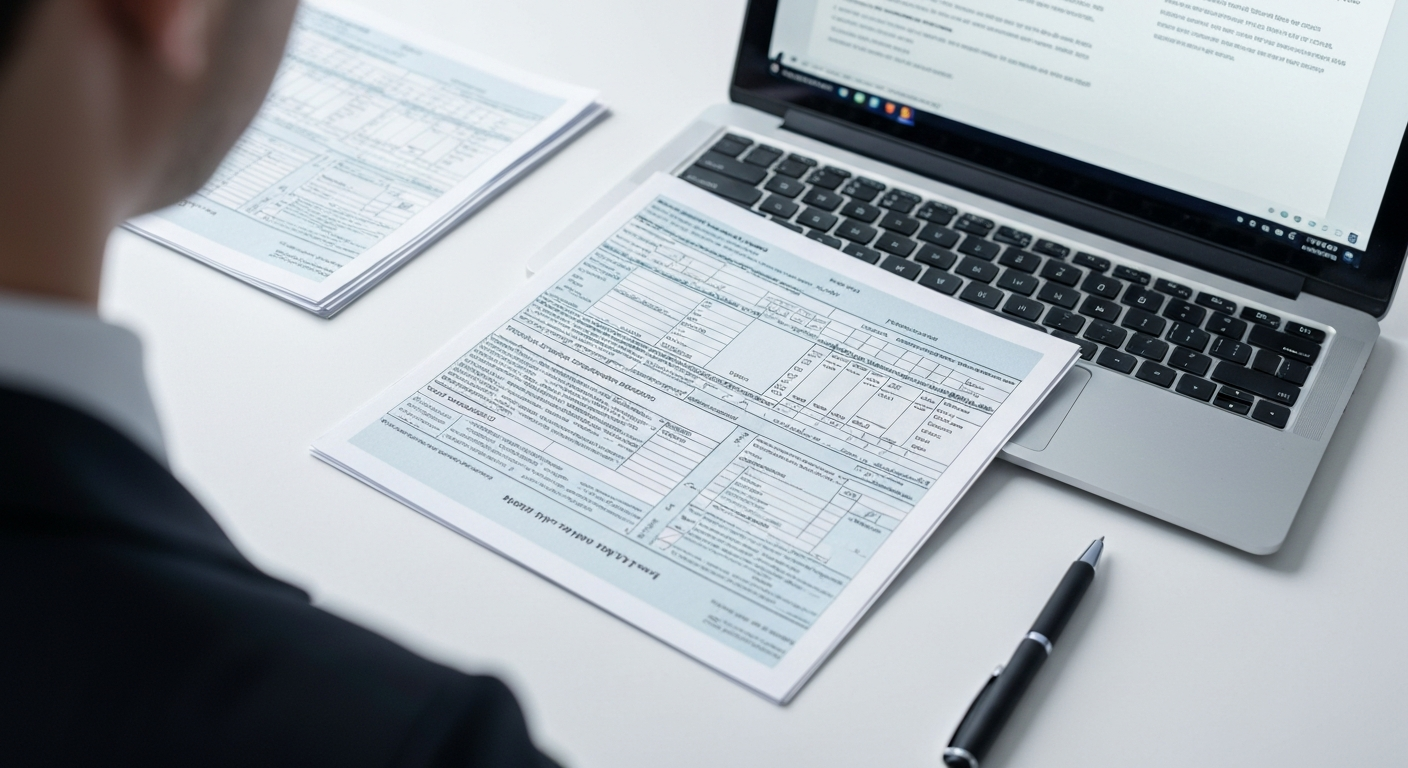
Understanding Every Line and Deduction Listed on Your Pay Stub
Quick Answer: A pay stub lists the pay period dates, hours worked and rate of pay, gross wages, every tax and deduction taken out, and the net amount deposited or paid by check. Deductions typically include federal income tax, Social Security and Medicare, state and local tax, and any benefit or garnishment amounts, while a separate section usually tracks year to date totals for each category. Pennsylvania regulation requires employers to list hours worked, pay rate, gross wages, and all deductions on every wage statement. Reviewing these numbers each pay period is the easiest way to catch an error in withholding, benefits, or hours before it repeats across months of pay stubs.
A new employee's first pay stub often gets a quick glance at the net pay number, then a fold into a drawer without much more thought. The rows above that number, labeled with abbreviations like FED W/H, OASDI, and YTD, rarely get read line by line until something looks off: a paycheck that's smaller than expected, a deduction nobody remembers signing up for, or a year end reconciliation that doesn't add up.
Every one of those rows exists for a reason, and most of them are required by law rather than optional formatting. In Pennsylvania, state regulation spells out exactly what a wage statement has to include: hours worked, rate of pay, gross wages, and every deduction taken from the check. Federal law adds its own recordkeeping requirements on top of that, covering how the underlying numbers get calculated and how long the records behind them have to stick around.
For a small business owner, knowing what belongs on a pay stub matters twice over. It's part of paying employees correctly, and it's part of showing the numbers were right if a question or an audit comes up later. Below is a line by line look at what actually appears on a pay stub, why each section is there, and what the rules say about it in Pennsylvania.
The format on the page rarely changes month to month, which is exactly why a shift in one number tends to stand out once an employee knows where to look. A withholding line that moves without a matching change in filing status, a benefit deduction that continues after enrollment ended, or a gross wage figure that doesn't reflect a recent raise are all the kind of small inconsistencies that show up first on a pay stub, long before they show up anywhere else.
What Every Pay Stub Includes
A pay stub is built around a handful of standard sections, whether it arrives as a paper printout or through an online portal. The exact layout differs between payroll systems, but the categories below appear in some form on almost every one.
Identifying Information
The stub usually opens with the employer's name and address, the employee's name, and the dates of the pay period it covers, along with the pay date itself. Some states also require an employee identification number in this section.
Hours And Pay Rate
For hourly employees, the stub lists hours worked at each applicable rate, including any overtime hours paid at a higher rate. Salaried employees typically see their salary amount for the period instead of an hours breakdown.
Gross Wages
This is the total amount earned before anything is subtracted, calculated from the hours and rate above or from a salary figure.
Deductions
Every tax and voluntary deduction taken out of gross pay gets its own line, covering everything from federal tax withholding to a health insurance premium.
Net Pay
What's left after every deduction is subtracted is the amount actually paid, whether by direct deposit or paper check.
Year To Date Totals
Alongside the current period's numbers, most stubs carry a running total for the calendar year in each category, from gross wages to a specific benefit deduction.
Why Direct Deposit Timing Isn't Always Identical
The deductions section is usually where the most questions come from, since it's made up of several categories stacked on top of each other rather than one clean number.
Federal Income Tax Withholding
Federal withholding depends on an employee's W-4 information, including filing status and additional withholding. It estimates the eventual tax bill, so employees earning identical wages may differ.
Social Security And Medicare
Social Security and Medicare are commonly labeled FICA. Employees generally pay 6.2 percent for Social Security and 1.45 percent for Medicare, totaling 7.65 percent of wages.
State Income Tax
Pennsylvania applies a flat 3.07 percent state income tax to employee compensation. Unlike graduated systems, this rate remains the same regardless of how much an employee earns.
Local Tax
Many Pennsylvania municipalities and school districts impose local earned income taxes alongside the state rate. The applicable percentage varies based on where an employee lives and works.
Benefit Deductions
Benefit deductions can include health insurance premiums, retirement contributions, and other elected benefits. Depending on how each benefit is structured, deductions may occur before or after taxes.
Garnishments
Garnishments occur when an employer must withhold wages under a court order or agency notice. Common examples include child support or unpaid debts, with amounts sent accordingly.
Tip: If a deduction amount changes without an obvious reason, like a new benefit enrollment or a change in filing status, checking the current pay stub against the prior one is the fastest way to catch a data entry error before it repeats for months.
Why Year to Date Numbers Matter
The year to date figures on a pay stub aren't just a running tally, they're a working record an employee and an employer both rely on.
For an employee, year to date gross pay and year to date deductions are often the fastest way to estimate what a coming tax return will look like, well before a formal tax document arrives. Lenders reviewing a loan application frequently ask for a recent pay stub specifically because the year to date totals give a documented income picture without waiting for a full year's tax return.
Business owners rely on those same running totals to double check that year end tax forms will be accurate. A W-2 or 1099 issued in January is built from the same numbers that accumulated pay stub by pay stub throughout the year, so a wrong figure that slips through in March can still be sitting in the December total if nobody catches it earlier.
Digital Pay Stubs and Employee Access
Paper pay stubs used to be the default, but a growing share of small businesses now generate pay stubs through an online payroll system instead of printing them. An employee logs into a secure portal to view the current stub, along with a running history of past pay periods and year to date totals, rather than waiting for a paper copy to be handed out or mailed.
That shift changes very little about what has to appear on the stub itself. The same categories, hours worked, gross wages, every deduction, and net pay, still have to be there and still have to match Pennsylvania's requirements for wage statements. What changes is how quickly an employee or a business owner can pull up an old pay stub when a question comes up, since a searchable digital record tends to be faster to check than a filing cabinet of paper copies.
Digital access also cuts down on a specific kind of interruption: the routine request from an employee who lost a paper stub or needs one for a mortgage application. A portal that lets employees retrieve their own records removes that request from the list entirely, while still leaving a complete paper trail behind it.
Keeping Pay Stub Records on File
Issuing a pay stub is only half the requirement. The payroll records behind it have to be kept for a set period too, and the rules come from more than one source.
Federal law, under the Fair Labor Standards Act, requires employers to preserve payroll records for at least three years, while records used to compute pay, like time cards and wage rate tables, only need to be kept for two years. Pennsylvania law sets its own retention period for payroll records, generally aligned with that same three year window.
Keeping organized records does double duty. It satisfies the legal requirement, and it means a business is ready if an employee questions an old paycheck, a lender requests income verification, or a state agency opens a wage complaint.
Pay Stubs From an Employer's Side
Employees usually think about a pay stub as a personal document, but for a small business owner it functions as one of the most detailed records in the whole business. Every stub generated over a year traces back to timekeeping, tax withholding tables, benefit elections, and any garnishment orders on file, all of which have to stay consistent with what actually gets reported to tax agencies at year end.
Handled well, that consistency becomes an asset rather than a chore. Accurate pay stubs support an unemployment claim response, back up a workers' compensation audit, and give a new manager a clean paper trail when questions about past pay come up. Handled poorly, small inconsistencies between what a pay stub says and what actually got filed can turn into the kind of discrepancy that draws attention from a state agency.
New hires add another layer to this. Each new employee means new withholding elections, a new benefit enrollment window, and sometimes a new local tax jurisdiction if they live outside the business's home municipality. Getting the first few pay stubs right for a new hire sets the pattern for every one that follows, which is part of why onboarding paperwork deserves the same attention as the interview that came before it.
Warning: A payroll record that's missing, incomplete, or inconsistent with what an employee's pay stub actually showed can turn a simple wage question into a bigger compliance problem. If your business isn't sure its records meet Pennsylvania's retention requirements, a review with a payroll or accounting professional is worth the time rather than assuming the gap won't matter.
A business bringing on its first few employees benefits from building the habit of checking pay stub accuracy every cycle, rather than only when something looks wrong, since that habit tends to prevent far more problems than it creates work..
Frequently Asked Questions
What does YTD mean on a pay stub?
YTD stands for year to date, the running total for a category like gross wages or a specific deduction from January through the current pay period. It's a quick way to check earnings without adding up every stub.
Why do two employees with the same salary have different paycheck deductions?
Differences usually come from personal choices rather than an error. Filing status affects federal withholding, benefit elections change the deduction total, and garnishments only apply to specific employees, not coworkers.
Can an employer provide pay stubs electronically instead of on paper?
In most cases yes, including in Pennsylvania, as long as employees can access and print their own stub without asking a supervisor. A payroll portal showing current and past stubs typically satisfies this.
What should an employee do if a deduction on a pay stub looks wrong?
The first step is comparing the current stub to the prior one and to forms on file, since most discrepancies trace back to a data entry issue or outdated election.
How long should a small business keep copies of employee pay stubs?
Federal law under the FLSA requires payroll records be kept at least three years, and Pennsylvania generally aligns with that window. Time cards only need two years under federal rules.
Is a pay stub the same thing as a W-2?
No. A pay stub covers a single pay period with current and year to date totals, while a W-2 summarizes an entire calendar year of wages for tax filing.
Getting The Details Right, Pay Period After Pay Period
A pay stub might look like a routine printout, but every line traces back to a rule, a calculation, or a choice an employee made, and all of it has to stay consistent from the first pay period of the year to the last. Reading it carefully, on both sides of the employer and employee relationship, catches a small error while it's still small, long before it turns into a mismatched W-2 or a wage complaint months down the line.
Paydays Payroll Company
has spent 30
years keeping pay runs, withholdings, and records accurate for small businesses across Pittsburgh, PA and the surrounding region, working through exactly the kind of line-by-line consistency this guide describes. That experience is what turns
pay stub
accuracy from a once-a-year scramble into a habit built into every pay cycle. Getting the first few stubs right for a new hire, and every one after that, is what keeps a business's records ready for whatever question comes up later.